Blog Digest: Pedi Clinic Spotlight, Child Tax Credit, Covid Vaccine Mandates, MGB Expansion, eLearning

UBT Spotlight: Pediatric Clinic

The Unit Based Team in the Pediatric Primary Care Clinic has implemented several ideas that make their work better, saving wasted time and improving communication. In the process, they have, among other things, developed ways to expedite hundreds of thousands of dollars in payments. Read more about what this enthusiastic group has been doing, with an interview of UBT Co-Leads Jen McRell and Maureen Guzzi.

The Unit Based Team in the Pediatric Primary Care Clinic has implemented several ideas that make their work better, saving wasted time and improving communication. In the process, they have, among other things, developed ways to expedite hundreds of thousands of dollars in payments. Read more about what this enthusiastic group has been doing, with an interview of UBT Co-Leads Jen McRell and Maureen Guzzi.

UMass Memorial eLearning 

Our hospital is using a new version of eLearning this year in order to keep compliant with federal regulations. Because of the additional time required to complete this year’s Annual Required Education, UMass Memorial now allows employees to do the eLearning from home. Some SHARE members have found portions of the eLearning difficult because it tests knowledge that they haven’t previously had to know for their jobs. We would like to know about your experience so that we can work to better help the hospital improve its eLearning program. Learn more, and let us know what you think . . .

Covid Vaccine Mandate 

UMass Memorial does not currently require employees to receive the Covid vaccine while it remains under Emergency Use Authorization. But that could change. Read more . . . 


Federal Child Tax Credit 

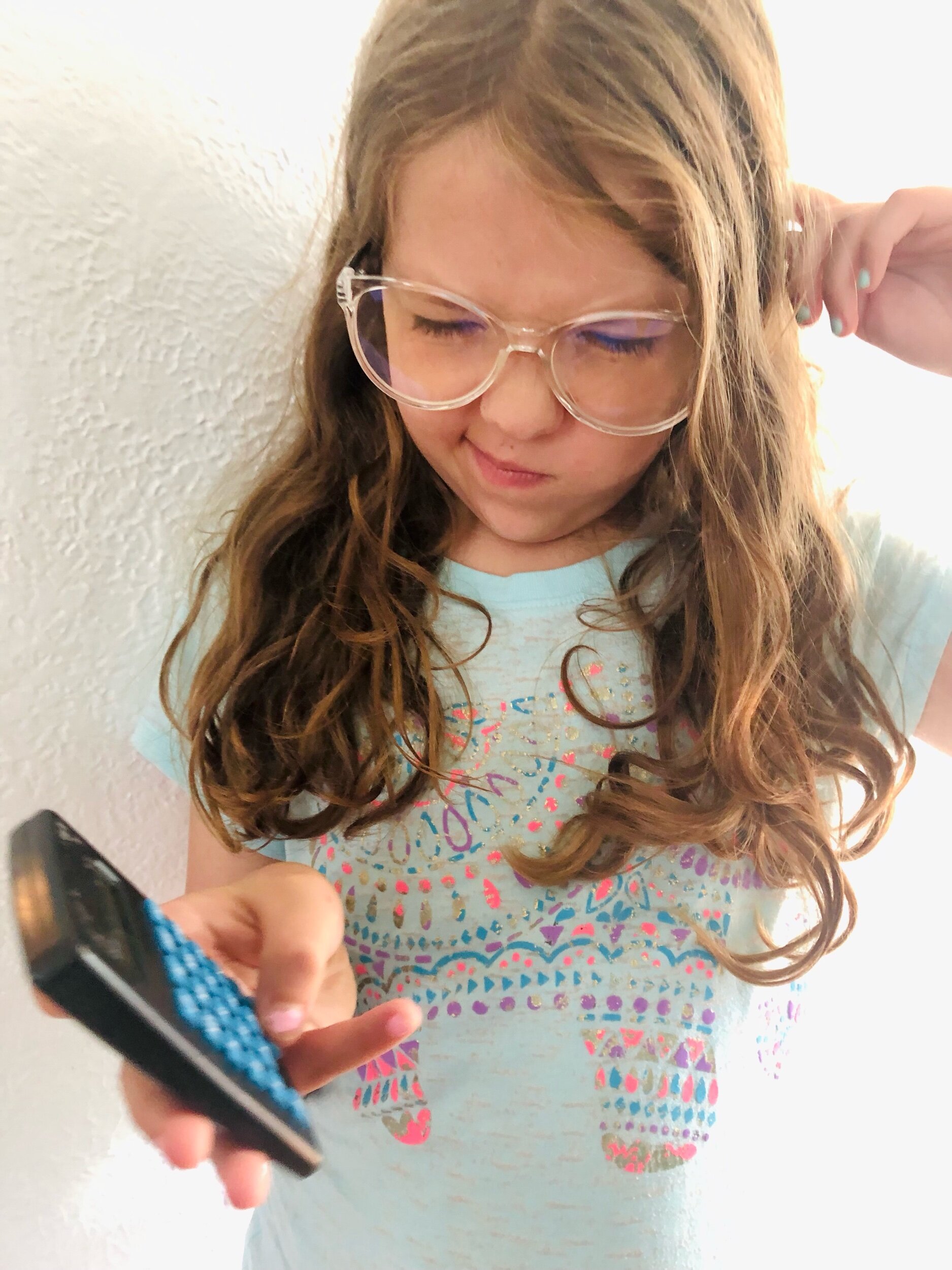
In response to the pandemic, unions pressed the government for financial relief provided by the American Rescue Plan, including the newly-enacted Child Tax Credit. Learn here how the Credit might affect you and your family. You can also calculate how much you can expect to receive using the free AFSCME Child Tax Credit Calculator


Mass General Brigham Expansion Update 

SHARE leaders and other members of the Coalition to Protect Community Care met recently with representatives from the Massachusetts Attorney General’s Office to discuss the ways that the MGB’s proposed expansion could undermine health equity in Central Massachusetts and put good healthcare jobs at risk. After the session, SHARE staff organizer Janet Wilder said, “It seemed to me that the Attorney General’s Office really wanted to know how they could help.” Read more . . . 

UBT Spotlight: Pediatric Clinic

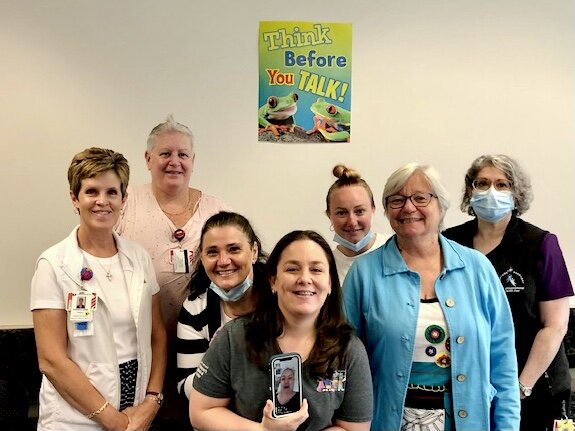
Pedi Clinic Unit Based Team (left-right): Pat Labbe, Anne Taylor, Maureen Guzzi (UBT Management Co-Lead), Jen McRell (UBT SHARE Co-Lead), Marnie Doyle (joining the team on the phone), Cassie Steele, Marie Manna (UBT Coach), and Joanne Hunt

Pedi Clinic Unit Based Team (left-right): Pat Labbe, Anne Taylor, Maureen Guzzi (UBT Management Co-Lead), Jen McRell (UBT SHARE Co-Lead), Marnie Doyle (joining the team on the phone), Cassie Steele, Marie Manna (UBT Coach), and Joanne Hunt

The Pediatric Clinic Unit Based Team (UBT) is a group of enthusiastic, thoughtful staff with a good sense of humor. In the discussions we’ve had on various topics, it’s clear that they care about their patients and their families . . . which, of course, leads to thinking about patient satisfaction as a high priority. The UBT has done valuable work over these past 3-4 years in taking on projects that improve work processes that benefit the patients, the staff, and the hospital. Some of these have involved streamlining processes like ordering a urine sample, paperwork needed, and communication within teams. All of this work helps to save wasted time, increase efficiency, and leads to more satisfied patients and staff. One particular project that helps the hospital was improving the wrap-up process in order to collect hundreds of thousands of dollars more in payments in a timely fashion.

I have very much enjoyed coaching this UBT, and - since they are so enthusiastic (read, “passionately talk a lot”) — I’ve had to use my coach’s time-out signal more frequently with them than with some other UBTs. While all members are enthusiastic, they each understand and appreciate the need to listen closely to one another which has built strong, respectful relationships. Their “enthusiasm” is a visible indicator of their commitment to their work, the patients, and each other.

—Marie Manna, UBT Coach

Jen McRell and Maureen Guzzi: Pedi Clinic UBT Co-Leads

Interview by Anna Weick, 2/23/21

J: In the Beginning, we didn’t know what to make of the Unit Based Team. But within a few weeks, people started feeling comfortable enough to come to us with ideas and things we could work on in the meetings. It did take a few weeks to get it up and running and get people on board with it. 

M: So, Jen and I have been together on this since the get-go. The UBT project was presented to the managers and we sent it out for volunteers. We tried to gauge interest and see who wanted to join. I had a core number -- not a huge number -- of people interested. Jen was one of the people who came to me and said she was interested, and she became my co-chair. The people who are currently on it have pretty much the people who have been on it since the get-go. We have had some people leave, and we’ve brought a few new people in. But for the most part, it has been led by the same people and same team who were interested in the beginning. While we might get more interest now, we encourage people to speak if they want to join, or to give us suggestions. Like Jen said, we originally met about almost 3 years ago. We met, we defined, with our coach Marie, who comes to all our meetings -- who guided us to where we wanted to go.

The staff went back out to talk to the other staff. Within a couple of weeks we had about 20 ideas when we first started this. We all met together and put the ideas in order of priority, and then we started to tackle them. We recorded it, took minutes, posted it on our UBT board in our lunch room area. We went through about 12 of those 20 things in the first year, putting them in order, starting one and seeing it through. Some of the stuff over the course of the year, it self-corrected. So the next year we talked about the next big three projects we wanted to take on. We tackled those three projects -- we probably weren’t as ambitious as when we originally started because we had a lot of small projects to go through. 

This last year we just met again, we looked again at the True North metrics for the organization, and we tailored what we want to accomplish around those. 

J: And then Covid happened . . . everyone got deployed for a while. 

M: Coming back we learned that -- reuniting back together was really challenging for us, so we had to spend some of our time on rebuilding the team. It was hard during deployment. 

J: And then going into new roles, with coming back -- now there are telehealth visits, and things not in person. It’s a whole new work environment that a lot of us weren’t used to. So, getting together and coming up with rules for that too. 

M: Normally they knew what they did every day. They did the same things pretty much every day. While you say you want to implement something new, we found the challenge is, well, you can’t just say ‘go do the telehealth,’ because no one knew how to do a telehealth. And then, when we thought we knew how to do the telehealth, the people doing the telehealth realized that there were inconsistencies in information that families and patients were getting. 

J: So we came up with a script for that to walk people through it.

M: That’s the kind of thing we talk about in our UBT meetings. When we started, we met every single week, up until about 6 months ago. Now we meet every other week. For the first two years we met every week for a hour. We always made it an important meeting, we only cancelled one or two meetings in the past 2 1/2 years. We try to say this is important and let’s at least connect. In the last couple months we are trying to keep the meeting to a half an hour -- we’re struggling a bit but it’s in appreciation of other employees’ schedules being disrupted by people being gone for a full hour.

Workflow things -- our clinic is huge, we started some of the efforts on the biggest thing that we all voted on -- something on Jen’s side, where at the end of the night, whoever was the last employee, they were getting stuck with a lot of responsibilities like 20 urine samples sitting, not having orders, and more. That was one of the first things we did.

J: For us on my side where I came from it was big. There was a lot of running around and chasing doctors for orders. So we came out with a strict list of what we do. So at the end of the day someone isn’t left wondering what to do. 

M: We tag into the True North metrics and we also continue to do stuff we started last year. The metrics are increasing number of patients. We started with a really low number and we have brought it back to the staff and identified 5 people who wanted to own the process themselves. We asked for volunteers and we were able to make those 5 people “super users” What could they do to support me to support the organization? We did that around MyChart. For telehealth, everyone is doing it, but people were struggling, so we made a little cheat sheet around workflow to make it easier for people.

J: We broke people off into teams and took sections of the doctors -- it was a domino effect, it made everything much easier. It made it a much smoother process after coming back from deployment, in this new transition that nobody really knows well. 

M: Jen’s more of the clinical nursing part, but we also have two ASRs who are on our UBT committee. They come to every single meeting and they are helping us with our efforts to collect co-pays. Pre-Covid we were pretty good about collecting copays, but then Covid hit and no one wanted to handle money or credit cards. We fell off and were collecting very little. Many in-persons were telehealth, you can’t make someone pay when they’re at home. So we used their input a lot to brainstorm how we could get better around our co-pays. We made efforts based on what the front desk staff thought and we implemented changes there. 

We started this journey about 6 months into the UBT realizing that -- we are attached to the hospital, so not only do we bill for provider visits but we bill for a facility charge. That’s attesting that they use space and rooms and nursing services here. I kept getting a report that we were missing the facility charges. I put a lot of efforts into it initially on my own before the UBT. How can I make sure people see that they didn’t do it? It’s a really busy clinic, these staff were seeing 325 patients a day. They’re busy and they forgot to go back and do it. So I started keeping my eyes on it and we ended up adding a column in our online system so we coil see. Still, things were getting missed. I caught a lot but I was still missing some. So I hired a clinical coordinator with her eyes on it. We were seeing about 50 still missing each month - it was a lot of money. Marie was really excited to know the UBT could be part of a financial gain, so we brought it to UBT. The people at UBT thought, hey, I can own a piece of this, we can have three people also on the floors who are looking at it. So Jen asked who wanted to do it. We were doing better, then COVID hit. And we came back from COVID and a lot of stuff people just forgot what to do. My eyes ended up going back on it. So we started knowing again that a lot is being missed. Recently we just brought it back to UBT, and we came up with a process trying to regain back where we were.

J: When we did it like that, it went from 50 a month then a couple weeks ago it was 0-5 a month. With all of us looking at it. 

M: We get like 170$ for that facility fee - it’s graded by level. It’s a lot of money. Two months ago we had zero in the month, first time in ten years. We learned something: of those five, sometimes they were booked as a physical so we did not do them, because we don’t do a facility charge for physicals, or the provider was late or unable to do the physical, or just did a follow-up. But the follow-up DOES need a facility charge -- we didn’t do it because something was scheduled wrong. Working together, we have a really great partnership. Not just with Jen and me, but with everyone on our team. People have been great to go out and share what we are doing with our UBT. Unfortunately, sometimes managers take the brunt of resistance to making change, without the buy-in. But I have my people also speaking to the changes. That's one of the biggest things for me as a manager. Buy-in from the people who are doing it -- people also feel open to saying what isn’t working, or what we need to change. 

J: There’s a good open line of communication, it makes it easy to get stuff done and come to people with our problems and concerns, and feel confident that it will at least get addressed. Even if it’s not perfect there will be an effort made. 

M: We have a really great UBT team because of the relationships. We’ve been through it from the get-go. We know what works and what doesn’t. We know how we each work. The biggest thing for me as a manager is that I want the change to happen I can try to justify my way, but I am not the solution. So really, the best thing for me is to have this core group of my team communicating workflow issues or changes. It’s great for the team to see that the changes aren’t always easy to roll out, we have to work at it, and sometimes go back to the drawing board.

J: The UBT gives us a better perspective of her responsibilities.  

M: They're going to go and work on the details. Just keep it open, they come and say anything to me. IT gets us to where we want to be in the end. Sometimes it’s like, “Holy moly, another thing!” But at the end of the day, our interests are in the staff and the clinic. This is the first time we were a Tier 1 project. 

J: An open line of communication is the most important thing for the UBT. The manager being open and receptive to your ideas. Everybody here as the same goal in mind. We work really well together. 

M: With that, we have our frustrations. Nothing is perfect here. We just started talking last UBT meeting about trying to understand everyone’s role -- and what people are doing every day. There are some hurt feelings if it seems like someone is working harder than others. So we made a mandatory meeting to discuss and understand better everyone’s roles and how we can all help each other on the team, and how to improve everyone’s workflow. The MNA has joined in our UBT -- we want everyone’s input. Sometimes we are in a meeting and think we have an agenda, but then someone brings up frustration from the floor. We haven’t been getting as many ideas right now, but even to have meetings to have conversations about what is going on in the floor. 

J: These are concerns from a week ago and we already have a meeting planned about it. 

M: The minutes are always typed up and posted so everyone can read it. There is a good line of communication. After the meetings I always email everyone about the direction we want to move in. The staff can start the conversation -- this is what we are trying to do. You HAVE to get the buy-in, you can't just have one or two people there. 

J: It has to be a group effort.  The more people that were involved, the easier the solution was to come to. 

M: For the wrap up, for me, when you put a dollar amount to it -- the staff all want the organization to be successful. It’s more than just, “you missed something.” Instead it’s, “Oh! We could have gotten an extra 10k this week if we had caught that” I think it led to an instant buy-in. Even from the get-go for us, we had all of those ideas come in, and then in the meeting we typed up all the ideas and asked the staff to pick the top three to work on. That’s how we sorted it. That took 2-3 weeks figuring it out. 

J: We kind of went with issues that they already knew were going on. And they saw the issues right in front of their face, that helped.

M: We included everyone in the process. We’d say “we’re doing this because of this, but do you have a better idea?”  We’d help teammates figure out the language to explain the changes to the other staff members. 

I’m not perfect, I go to the floor and try to help them when they say they’re drowning. I have been in their shoes. I think that is really helpful. I appreciate how hard it is.

J: She doesn’t reprimand. She brings stuff up that gets everyone on board and wants to be proactive about it. You aren’t feeling like you are being singled out or reprimanded. She has a different way of saying hey, we need something else. 

M: We are successful because of our partnership amongst ourselves. I’ve told people, well, I remember when I first started UBT, I did feel like “OMG, this is another thing, it’ll be a lot of work” . . . and honestly, it probably was. The first six months to a year, it was a lot — the minutes, communications, updating everyone. Yes, it took effort. But we are in such a better place. The solution isn’t with the manager, it’s with the team. If I didn’t have my team, I’m not successful. I’m only successful because of them -- and having the appreciation that you need buy-in. At the end of the day, it’s them doing most of the work, telling you what is not right out there. I can only assume everything is perfect and then it’s not. If they don’t tell me what isn’t going well, I’m looking pretty foolish if I think I have a wonderfully running clinic. You have to rely on your people. People can join any time they want. We want people to tell us what’s going on, in the meetings or with suggestion notes. 

J: Everything was hairy when we came back from deployment. Working with new rules for months and then coming back to a new environment — it was really hard. Even though we are back, it’s completely different. 

M: Some people were upset with others. I think when you are away for four months, you do forget some of the stuff. People forgot to do steps in their processes. 

We used to have 300+ patients in-house; now it’s 150 in-house and 150 telehealth, so the workflow has still totally changed since Covid. 

J: Our workflow is much better now and smoother because everyone knows their roles. 

M: We did a video before COVID hit, for the staff. We  have done some dancing and singing videos. We have a new one coming out, we are looking to a mask-free summer. We are trying to show the hope we have through our new video that will be coming out. It’ll be out on the UMass page.

J: We do really like each other and we have fun. There has to be a balance. Plus we are with kids, so it’s a different environment. For the patients’ sake, they are coming in scared. When you’re a bit of a goof, it makes them a bit more comfortable. 

Covid Vaccine Mandate?

As yet, UMass Memorial Hospital has not implemented a requirement for staff to be vaccinated against COVID. Hospital leaders have already said that they expect to require the vaccine when the Emergency Use Authorization is lifted. 

Why Would an Employer Mandate? 

Hospitals maintain that the vaccine is good for patients and employees. Research shows that the COVID vaccine is effective at preventing disease and its spread, and at reducing the severity of the disease in the case of breakthrough infection, including, to a good degree, in the case of the existing known variants.  

There is pressure from the public for hospitals to require the vaccine. Groups such as The American Medical AssociationThe Association of American Medical Colleges and this coalition of infectious disease organizations  have already endorsed a mandate. Although public opinion about mandates was mixed at the end of 2020, a majority of Massachusetts residents have now been vaccinated, and many patients expect their healthcare providers to be vaccinated, too.  

Is a Mandate Legal? 

While it may or may not be legal for an employer to mandate the COVID vaccine while it remains in Emergency Use Authorization status, there is legal precedent to require vaccines. Houston Methodist Hospital recently made headlines when a federal judge dismissed a lawsuit brought by employees who objected to a COVID mandate already instituted there.  

Here in Massachusetts, a Suffolk Superior Court judge upheld Brigham Women & Children’s Hospital’s flu vaccine mandate in 2017 when it was challenged by the Massachusetts Nurses Association (MNA), the union representing Registered Nurses. 

What Is SHARE Doing? 

SHARE leaders are watching this issue closely, and talking with co-workers about what they think. There is a wide range of opinions about the COVID vaccine in our union of 3000 people, and some opinions are at odds with each other. We’re working to stay on top of the latest information on the topics involved, including the scientific, legal, and ethical issues.  

SHARE is also talking consistently with management about what they are going to do about the COVID vaccine. The bottom line is that we want SHARE members to keep their jobs. We will continue to encourage the employer to think responsibly, creatively, and flexibly about any developing vaccine policy.  

Other SHARE posts about the COVID vaccine 

New eLearning This Year: What Do You Think?

UMass Memorial’s Annual Required Education (ARE) looks pretty different this year – the hospital replaced their old version with a new eLearning package.  It turns out that national regulations now require that all hospital workers receive training in more than we were getting in previous years.  This means that everyone will be seeing content (if you haven’t already) on subjects such as recognizing elder abuse, protecting against blood-borne infections, and end of life care . . . things that may seem pretty remote and out-of-scope to many SHARE members.  None of this content was written or determined by UMass Memorial – we are told that these same modules are used by 80% of workers at academic medical centers nationally. 

It’s possible to test-out of some of the content and save some time.  That said, you should expect things to take longer this year – perhaps 5-6 hours.  And many members are also finding the content more challenging, which makes it harder to dip in and out of throughout the day in between other tasks. 

The deadline is July 30th, which means this is the final week.  UMass Memorial is supposed to give you the time you need to complete this training; if you anticipate that it’s going to be hard to find the time to finish this week, you should talk to your manager right away.  Because of the extra time needed, managers have the option this year of making it possible for SHARE members to complete their ARE at home (for pay, of course), so talk to your manager if you think this might be a good option for you.

We’re continuing to meet with HR to discuss SHARE members’ eLearning. Although this year’s program seems to be set in place, please let us know what you think so we can make next year’s experience better.  And if you haven’t finished yet and need help figuring out with your manager how you’re going to get it done, reach out about that too. 

The Federal Child Tax Credit: Calculate Your Amount, and More

Child Credit Calculator for Union Members 

In response to the pandemic, unions pressed the government for many of the financial reliefs provided by the American Rescue Plan, including the Child Tax Credit. You can calculate how much money you can expect (up to $3600 annually per child) using the AFSCME Child Tax Credit Calculator. Please note when you fill in the form that SHARE members at UMass Memorial Hospital are in AFSCME Local Number 3900.  AFSCME is the parent union to SHARE. (Providing your cell phone number signs you up by default to receive text messages from AFSCME and its affiliates, although you can also opt out of these.) 

Calculation Basics 

According to CNETFor parents of eligible children up to age 5, the IRS will pay up to $3,600, half as six advance monthly payments and half as a 2021 tax credit. For each child ages 6 through 17, the IRS will pay up to $3,000, divided in the same way this year and next. For dependents aged 18 or full-time college students up through age 24, the IRS will make a one-time payment of $500 in 2022. If your AGI (Adjusted Gross Income) is $75,000 or less as a single filer, $112,500 or less as a head of household or $150,000 or less filing jointly, you'll get the maximum amount. 

Other Useful Tools 

Mass General Expansion Update

Last week, SHARE joined other members of the Coalition to Protect Community Care to talk with the Massachusetts Attorney General’s Office about Mass General Brigham’s (MGB) proposal to expand to Westborough, Westwood and Woburn, which we have reported about here previously.

The Attorney General’s office wanted to understand why each group objected to the MGB plan. SHARE Representative Janet Wilder spoke about our concern that a large MGB facility in Westborough would lead to layoffs at UMass Memorial due to the loss of patient volume. In addition, MGB is the most expensive care system in Massachusetts – if the cost of health insurance rises, that makes it more difficult for us to negotiate for raises and other benefits. The Mass Nurses Association representatives talked about MGB’s focus on wealthier communities that don’t need more options for healthcare. Representatives of the nonprofit organizations United Way and Centro talked about how much UMass Memorial has helped them provide services to their communities during the pandemic. Doctors representing independent private practices talked about how hard they are working to keep care affordable: Why would the state authorize the expansion of the most expensive care? A representative of the Worcester Regional Chamber of Commerce talked about the effect of more expensive health insurance on small businesses.

“It seemed to me that the Attorney General’s Office really wanted to know how they could help,” said Janet Wilder. The next step is the completion of the independent cost analysis of the effect of MGB’s proposal, which we hope will evaluate the proposal’s impact on the cost of care and on equity. SHARE will continue to make our members’ voices heard in this process.

Rep & Eboard Election Results (Plus, Learn About Your Pension!)

SHARE_LOGO_LARGE_BETTER.jpg

Many thanks to all of you who sent in contact information, let us know your preferred voting method, nominated your coworker, or nominated yourself in our first ever attempt at an electronic election of SHARE Reps and Executive Board Members!

The nomination process went smoothly, and there were enough open positions that no voting will be required this year. A vote is only held when there are more people running than there are positions to run for. So, we won’t get to try out the online voting process this year. But the good news is that many people stepped forward to be active in SHARE, and that makes our union stronger.

Congratulations to the new and returning SHARE representatives, who are now considered elected! Visit the SHARE hospital website for an updated list of all current SHARE Reps and Executive Board members. If you have any questions, please let us know.

Thank you,

The SHARE Election Committee

p.s., Be sure to check the blog for details about next week’s Virtual Pension & 401k Information Meetings. They’ll be held on Zoom Monday evening and Tuesday midday.

Blog Digest: Opposing MGB Expansion, Spotlight on the Single Billing Office, and More!

YOU Can Help Oppose MGB Expansion

The SHARE Executive Boards at the Med Center and Marlborough Hospital have voted to join the Coalition to Protect Community Care. SHARE leaders are already on the record as opposing the expansion of Mass General Brigham (MGB), because the expansion threatens SHARE Union jobs, the financial stability of our hospitals, and care for our most vulnerable patients. (Read more about how MGB’s expansion could impact SHARE jobs and Central Massachusetts.)

We encourage you to make your voice heard. The Department of Public Health has reopened the public comment period from now until Wednesday, June 2nd at 5PM ET. It’s really quick – just takes a minute!

  • Using the coalition’s online platform, just enter your name and address, then

  • You can add your thoughts to the statement or just hit “submit” to send the basic message of why we oppose the Mass General Brigham expansion.

  • Share to any and all who might be willing to help with this! (To make it easy, you can use the email template found here.)

Laurie Abernathy, SHARE UBT Union Co-Lead. Before the UBT, she says process improvement could often seem like “putting a band-aid on top of a band-aid.” (photo credit: Candace Tauson)

Laurie Abernathy, SHARE UBT Union Co-Lead. Before the UBT, she says process improvement could often seem like “putting a band-aid on top of a band-aid.” (photo credit: Candace Tauson)

Spotlight on the Unit-Based Teams: The Single Billing Office

SHARE and UMass Memorial continue to grow our Unit Based Teams program. We’ve taken the opportunity to spotlight the work of the UBT in the Single Billing Office (SBO). Shortly after launching their team, the pandemic hit, and SHARE members there were suddenly thrust into a work-from-home situation. But the SBO used their UBT to keep making strides, improve service to patients, and make their own work more satisfying. To hear their story, check out this this interview with UBT Co-Leads Laurie Abernathy and Michelle Locke.


Nominations Are Now Open for SHARE Executive Board and Representative Positions

Don’t forget! You can nominate a co-worker or yourself through June 9. See full details here.

We hope you have a safe and meaningful Memorial Day Weekend. As always, thank you for everything you do to keep our union and our hospital running strong.

*YOU* Can Help Oppose MGB Expansion

SHARE opposes the expansion of Mass General Brigham (MGB) because the expansion threatens Union jobs, the financial stability of our hospitals, and care for our most vulnerable patients. (Read more about how MGB’s expansion could impact SHARE jobs and Central Massachusetts.)

SHARE Encourages You TO VOICE YOUR CONCERNS

The Department of Public Health has reopened the public comment period from now until Wednesday, June 2nd at 5PM ET. It’s really quick – just takes a minute!

To make providing a public testimony for community members that have not yet testified easier, the Coalition to Protect Community Care has launched an online platform that allows you to fill out your personal information and send a testimony for public record directly to the Department of Public Health’s Determination of Need program. In other words:

  • Just enter your name and address, then

  • You can add your thoughts to the statement or just hit “submit” to send the basic message of why we oppose the Mass General Brigham expansion.

  • Share to any and all who might be willing to help with this! (We’ve included a sample email template below)


Sample Email Template

Hi X,

SHARE is proud to support the Coalition to Protect Community Care, which is opposing Mass General Brigham’s proposal to build outpatient facilities in Woburn, Westborough and Westwood. We have serious concerns that, if approved, Mass General Brigham’s outpatient centers will threaten the financial viability of critical local healthcare providers; exacerbate healthcare inequities; increase the cost of care; and jeopardize essential local jobs.

The Department of Public Health is now accepting public comments on Mass General Brigham’s proposal until Wednesday, June 2 at 5PM. If you would like to make your concerns known, please feel empowered to submit a pre-written comment via this online petition platform.

If you have colleagues, family members and friends who are also concerned about Mass General Brigham’s plans, we encourage you to share this online platform with them so that they too can make their voices heard.

Thank you in advance for your advocacy.

Best,

X

UBT Spotlight: Single Billing Office

Laurie Abernathy, SHARE UBT Union Co-Lead. Before the UBT, she says process improvement could often seem like “putting a band-aid on top of a band-aid.” (photo credit: Candace Tauson)

Laurie Abernathy, SHARE UBT Union Co-Lead. Before the UBT, she says process improvement could often seem like “putting a band-aid on top of a band-aid.” (photo credit: Candace Tauson)

A NOTE FROM THE SHARE CO-SPONSOR 

Before establishing a Unit Based Team, the SBO had already been consistently improving. Still, morale among the staff was rocky. Just before we launched the UBT, I attended a staff meeting like none I’d ever seen, one that brought the whole department together . . . except that management stayed out of the meeting so that the staff felt more comfortable to speak freely. 

The conversation was led by staff member and SHARE Rep Laurie Abernathy. The staff speculated about how to deal with their many frustrations: turnover had been high, management had been difficult to contact when angry patients needed to be escalated. Their idea-board ideas were stuck in the parking lot, and they found themselves often unable to communicate about essential things. The staff felt adrift and underpowered, detached from other departments in the hospital, and even from their own management structure. But they clearly wanted to do the best job they could, taking care of patients and one another.    

At the request of the staff, Laurie brought the concerns and ideas back to me as their SHARE organizer, and to SBO Director, Joy Cournoyer. Joy listened thoughtfully, intent to make improvements. And now that we’re UBT Co-Sponsors together, I’ve gotten to see firsthand how the UBT structure has provided new ways for leadership to support and champion this Team.

Together with Management Co-Leads Michelle Locke and Rebecca Boutilette, Laurie and a half-dozen other SHARE members have been meeting as a team every two weeks. As a result of their UBT, I’ve seen the whole department better enabled to bring their expertise and compassion more consistently to every interaction they have with patients. They have a great story to tell . . .

--Kirk Davis, SHARE Staff Organizer and UBT Co-Sponsor 

Michelle Locke & Laurie Abernathy,

SBO UBT Co-Leads

Interviewed by Rafael Rojas 

The Unit Based Team: First Impressions

Laurie: I first heard of the UBT when I became a union rep. It was about two years ago when I first heard of the idea, and I immediately thought,” Oh my goodness, my department needs this so bad, we could really flourish from working through this system. We’ve always had ideas, and we’ve usually been able to figure out what the problem is, but we would have a hard time with figuring out how to solve them. We would resort to putting a band-aid on top of a band-aid until some change down the line would just blow all of our band-aids off and we would be forced to start from square one.”  

Michelle: So much progress has been made in our department as a result of the UBT. I can honestly say that in my short amount of time here, that I’m unsure that we would have even been put a lot of our goals on the list of what we needed to improve. The UBT has forced us in a good way to hold our feet to the fire. We are making a commitment to the UBT, but also to everyone in the department and it’s a great thing to feel responsible for. We are making changes that will help in the future past the pandemic as well, which is just really exciting.  

The First Challenge: Updating the Process Documents 

Michelle: When this UBT formed we had a tough time deciding exactly what metrics we would follow to track our progress and improvements, but these have proven to be helpful, and we are still constantly thinking of different and better ways to measure these changes.  

Michelle: Our primary, but also biggest obstacle and challenge that the UBT has taken on has been updating our process documents. Our process documents are not only outdated, but they lack information of many processes that happened in our department. Those documents that we did have were scattered throughout a SharePoint site that were not easily accessible. If a representative was looking for information while they were on the phone with the patient, they would be stumbling on the phone just to get them that information. In addition to that, being in the office brought the advantage of being able to lean over and get help from a coworker or from one of the two team-leads that were present on the floor. This is something that simply could not translate to working from home, and it became urgent for us to figure out how to organize this information for the representatives and a patient. We wanted to be sure that we could not only get the patients the information in a timely manner, but to get them the entirety of their information accurately.   

In order for us to take on all of these process documents, we as a team have to figure what is the most important document. Where do you start when you take a look and see a hundred or more process documents that need to be updated, where do you even begin? We took a lot of time in meetings and in person, but primarily since we’ve been home, it’s taken a lot of time as a group to get together and brainstorm what is going to be the most beneficial for who’s on the telephone – so let’s first put together our list of process documents, then let’s prioritize them in order of which will have the biggest impact. Then comes the challenge of deciding who will write these process documents? It’s great that we know we need all of these documents, but who has the skills and who has the time to write all of these documents? Working on this from home has been extremely challenging, but we are making significant progress on this end.   

UP-ENDED BY THE PANDEMIC  

Michelle: Our UBT has been in existence for a little over a year now. When it started, we were a department that was working in an office together, so the dynamics were very different from what they are today. At first, we would meet in a group environment, but after March of last year it shifted to working from home and meeting remotely. This change had a big impact on a lot of people’s lives and really shook up the department. It is not that the UBT was pushed to the side, but we simply had a lot on our plate and certain changes did not allow for the UBT to receive the amount of time that it deserves. The priority was first to make sure that everyone was safe and settled at home as the setting of our work shifted. It was only for a few months that the UBT received less time than we had hoped, but we got right back to it as soon as we were acclimated to working from home.

“Our department went through a significant change in the way that we measured productivity. In a call center environment, you typically take a look at the amount of telephone calls that a representative is taking. Once the shift to working from&nbsp…

“Our department went through a significant change in the way that we measured productivity. In a call center environment, you typically take a look at the amount of telephone calls that a representative is taking. Once the shift to working from home happened, the UBT presented the opportunity to change this measuring system that was among other broken parts of the system. The UBT served as a catalyst to implement and make a lot of the changes that we were in the process of doing in a manner that was more manageable for the reps. Instead of management or leadership initiating some of the conversations around issues and concerns, it is the UBT as a whole that presents these topics at our meetings. To have a system of communication that involves all parts of the department makes it feel like a very welcoming space to present some of the issues and concerns that the department has,” says SBO UBT Management Co-Lead Michelle Locke  (image from presentation to LMPC)

Laurie: Our department has a large age range, so it can take those who are not as used to relying on so much technology to get their work done forever to simplify the processes and transitions to working from home. For months we just could not get the web-ex meetings to work properly for all of our members and it forced us to slow down and make sure that everyone could acclimate to the change. When we were working on this project of organizing the documents, we also wanted to be sure that we could format and sort them in a way that is accessible to all of our employees. We’re not quite there yet, but that will be one of the challenges that we overcome. People learn differently and the key will be to figure out the best way to train these process documents to a group of people that all have various ways of learning and understanding this information.   

Laurie: Our department as a whole had the capacity to figure out where the problem is, what is causing it, and even thinking of how to fix it. The biggest problem was always trying to implement it. We could only take a project so far, but then we’d have to stop and wait for someone to finish.   

THE UNIT BASED TEAM: AN IMPROVED IMPROVEMENT SYSTEM  

Laurie and Michelle recently presented about their UBT’s challenges and successes to the Labor Management Partnership Council. Our hospital and our union meet monthly to plan together about shared goals and concerns in a group called the Labor Management Partnership Council, or LMPC (see page 6 of the SHARE Contract Agreement for a description of this group).

Laurie and Michelle recently presented about their UBT’s challenges and successes to the Labor Management Partnership Council. Our hospital and our union meet monthly to plan together about shared goals and concerns in a group called the Labor Management Partnership Council, or LMPC (see page 6 of the SHARE Contract Agreement for a description of this group).

Laurie: As an alternative to the old improvement system (in which someone would get fed up with something and send an email to management, who would then send an email over to someone else and create a chain that was difficult to track and really emphasize), we now have a chart that organizes and prioritizes our ideas and problems. When something is posted on it, it goes out to everyone, and then everyone has the ability to add their input on how important it is to them or not. 

Michelle: Altogether, we have identified and organized 103 different processes prioritized by where it will benefit the representative and where it will benefit the patient. So far, we have completed 20 of them since January.  

Laurie: Everyone’s experience in the office is different, but this system really allows us to validate these issues and have them be addressed when they need to be. This has really helped us in our project to update our process documents and the representatives all give good input on where the information is lacking. There is really a lot involved in it when you keep in mind the training that comes with accessing the new documents once they are put together, we are making a lot of progress where a lot of work has to be done, but we are not cutting any corners. As soon as the training is done, we upload the document to a SharePoint site to have it be electronically accessible to everyone. Sometimes, we will even identify to some problems with the documents or programs, and we will go back into the steps to fix it.  

WE CARE FOR PATIENTS . . . AND OUR CO-WORKERS  

Michelle: We are a very food-driven department with some amazing cooks and menus. We are all here to work, we are not independently wealthy with mortgages to pay and families to provide for. We have to work, and this comes with high goals and expectations. It is important to find some point in the day that is full of humor, and this is something that we tried to implement into the UBT.  When you ask yourself if you have goals that you have to make, also ask yourself if you can do it in a fun and enjoyable way. With the inception of the UBT, we could not imagine a better way than to introduce it in a way other than a potluck. It was still a professional and formal way, but it was something that everyone could bring something that they enjoyed. If this team was going to be successful, it had to be introduced that made everyone had faith in us for getting things done and improving what they needed. It also opened the door for a system that excited people and motivated them to be a part of the team. With this in mind, we wanted to be sure that those who joined would work well with each other when solving problems, and it has really worked out. If anyone ever feels burnout after finishing a project, there is room to make a newer team that is ready and excited to take on new challenges.   

Laurie: We are essentially a customer service department, so we are always very patient-driven. Our motto is always that the patient comes first, and sometimes we will identify a procedure that doesn’t feel top beneficial to the patient, so we will shift our perspectives and approach accordingly. As a result, we find ourselves working smarter, not harder.  Michelle will always help us in reducing the number of steps that we have to take to get the patient their information in the shortest amount of time while working on a very daunting computer program and simultaneously being on the line with someone who is eager to get their information. If we can get them what they need when they need it, the whole process becomes easier for us too.   

Michelle: To be a part of this team is truly exciting. It is exciting to see the rest of the team involved and motivated. It is moving to feel the trust that we have in one another to get things done. As a team, it’s a huge motivator to participate because everyone has been so defeated previously in our attempts to make change. It is inspiring to feel that we all want to get things done and make our department the best that it can be.   


SHARE Joins Coalition to Protect Community Care

The SHARE Executive Boards at the Med Center and Marlborough Hospital have voted to join the Coalition to Protect Community Care. SHARE leaders are already on the record as opposing the expansion of Mass General Brigham (MGB), because the expansion threated SHARE Union jobs, the financial stability of our hospitals, and care for our most vulnerable patients. (Read more about how MGB’s expansion could impact SHARE jobs and Central Massachusetts.)

By joining the Coalition, SHARE joins forces with providers (UMass Memorial, Shields and Wellforce), community organizations (including the YWCA, the Boys and Girls Club, the United Way, Thrive, Centro and the Central West Justice Center), the Chambers of Commerce of Worcester and Marlborough, and the Mass Nurses Association.

The latest that we’ve heard from the Mass Department of Public Health about their decision about allowing MGB to build these new clinic centers is that DPH has extended the comment period because some technical problems prevented people from submitting their comments.


Blog Digest: Pension & Retirement Info Meetings THIS WEEK, Union Elections, and More . . .

Your Pension and 401K: SHARE Member Info Meetings

On Wednesday and Thursday this week, SHARE will be hosting online training sessions about the Pension and 401k. Did you know that, as a SHARE member, you have a Defined Benefit Pension? Do you know how to take advantage of the hospital’s 401k contribution match? Please join us! Click here for meeting times and login information . . .

Emails from AFSCME

AFSCME recognizes the important work of union members through its Never Quit award. One of last year’s recipients was SHARE’s own Jackie Rodriguez! (Click the image for her story)

AFSCME recognizes the important work of union members through its Never Quit award. One of last year’s recipients was SHARE’s own Jackie Rodriguez! (Click the image for her story)

This month you should receive a series of emails from SHARE’s parent union, AFSCME. These will celebrate the work of the more than 1.6 million AFSCME Union members from throughout the US.

AFSCME also encourages you to stay in touch by making sure that they have your most recent contact information on file. You will soon receive an email showing the current contact information they have on file and will give you the opportunity to confirm or update your name, email and phone number. This helps to keep you current with benefits including Union Plus and the AFSCME Free College Benefit.

Important Information about Upcoming Union Election

All SHARE members were recently sent notification of the upcoming SHARE elections. The notice describes how to make sure you’re a registered member, learn about the new online voting, and update your contact information to stay connected. In case you missed it (or misplaced it), that information is all online: you can read it here.

Your Pension and 401K: SHARE Member Info Meetings THIS WEEK

Join us to learn about your pension, and about your 401K

  • Yes, you have a pension! Learn all about it.

  • Are you taking advantage of the hospital’s “match” for your 401K? Learn more about saving for retirement.

  • We’re hosting two remote sessions this week (login details below).

  • Please help spread the word to your co-workers. Thank you!

Wednesday, May 12

4:00-4:30 pm

https://us02web.zoom.us/j/88115920056?pwd=djFXcCtybDB4RUdEbGJ6eDRPRzZtdz09

Meeting ID: 881 1592 0056
Passcode: 977500
One tap mobile
+13017158592,,88115920056#,,,,*977500#

Thursday, May 13

12-12:30, or

12:30-1:00

https://us02web.zoom.us/j/85311064152?pwd=UTdUendGS3lETDkzVWplYTZMczZaUT09

Meeting ID: 853 1106 4152
Passcode: 094845
One tap mobile
+13017158592,,85311064152#,,,,*094845#

Important Info for Upcoming Union Election 

Online Voting

SHARE members will be able to vote electronically for the first time, using a smartphone, tablet or computer. The process will be run by an independent, certified online voting company. There is also an option to vote by mail for those who prefer it. Electronic voting will make participation easier for employees who are on vacation, working from home, or who are not easily able to get away from their department.      

Update Your Contact Info 

We need to make sure we have your personal contact information for the upcoming SHARE Rep and Executive Board Elections. The online voting company can send the link/ballot by:  

  • text to your cell phone number,

  • email to your personal (non-work) email account, or

  • U.S. mail to your home address

So, to prepare for the election, we need to have your up-to-date contact information. You can update your contact info one of two ways. (1) click here, OR (2) email share.elections@theshareunion.org to send your contact info by 5/3/21.    

If you Prefer to Vote by Mail

Please email us at share.elections@theshareunion.org by 5/3/21 to let us know that you would prefer to have a paper ballot mailed to your home.    

When Are Elections? 

You’ll be receiving a letter inviting you to nominate your co-workers and/or yourself in early May. If we have more nominees than available slots, we’ll hold elections in early June.    

Haven’t Yet Signed Your Membership Card? 

There are some of you, especially newer employees, who haven’t signed a membership card yet. While there are a number of reasons why this might be, we want to make sure we give you a heads-up so that you can sign up to be a member in time for the vote.  

If you have any questions about joining the union, don’t hesitate to contact us by emailing share.newmembers@theshareunion.org, calling 508-929-4020 or reaching out to your SHARE organizer, rep or executive board member directly. You may also find the answers to some common questions by clicking this FAQ about SHARE Union membership.   

If you’re ready to join today, click here to find a PDF of the card online. To send SHARE a signed card via email, you can print the card, sign, scan and email it to share.newmembers@theshareunion.org. To send via mail, please let your organizer know your address and we’ll send you a blank card along with a pre-stamped envelope.   

Questions? Concerns?

Please don’t hesitate to contact us by emailing share.elections@theshareunion.org, calling the office at 508-929-4020, or contacting your organizer directly. 

Blog Digest: Juneteenth, New Website Highlights, and Opposing MGB Expansion

SHARE Members Testify Against Mass General Brigham Expansion to Westborough

Rita Caputo, SHARE Co-President at the Med Center testified, “If MGB drives up the costs of health care, it’s going to hurt everyone except MGB. At least we have a union to try to figure out what to do about it with our hospital, on behalf of our me…

Rita Caputo, SHARE Co-President at the Med Center testified, “If MGB drives up the costs of health care, it’s going to hurt everyone except MGB. At least we have a union to try to figure out what to do about it with our hospital, on behalf of our members.”

At the DPH virtual hearing on April 6, SHARE members from both UMass Memorial Medical Center and UMass Memorial Marlborough Hospital testified against MGB’s proposal to expand to Westborough. As the Worcester Telegram & Gazette reports, “Voices of many, including local and state officials, rose in opposition to Mass General Brigham's plans for an ambulatory care center in Westboro as the Department of Public Health hosted a hearing on the application for the project.” Read what SHARE members had to say . . .

Juneteenth becomes a massachusetts state holiday

Last Summer, Governor Baker designated Juneteenth as an official Massachusetts state holiday. Also known as “Freedom Day,” June nineteenth recognizes an important event in realizing the full emancipation of slaves in the United States. The change does not alter the current contract agreement our union has made with UMass Memorial about the holiday schedule. The new designation is already making a meaningful impact. Read more . . .

New Website Highlights

We’re constantly adding more information and resources to our union’s website. Did you know that you can easily search the SHARE site by subject or keyword? Have you seen our recently updated Welcome Page for New Members or the SHARE guide to Getting Help of all kinds? Or the latest on our home page Twitter feed? Learn More . . .

A Website for You and Your Coworkers

Our union’s Twitter feed collects up relevant news for members  from around the web, and publishes to the SHARE home page

Our union’s Twitter feed collects up relevant news for members from around the web, and publishes to the SHARE home page

Our union was built one conversation at a time, and continues to grow and strengthen through our connections. The SHARE Reps and Organizers are always happy to help think things through together.

Over the years, we’ve also worked to develop our website, filling it with easy-to-access ideas and information. You can quickly find what you need, by keyword or by subject, using the site’s search tools. Or, browse around to get a glimpse of the many things our union is doing.

SHARE continually adds information to our union’s running blog, and to the rest of our website, too. Have you seen our updated Welcome section for new members? Or the Getting Help section, which provides resources of all kinds: financial, legal, personal health, counseling services, dealing with managers and co-workers, and much more?

Is there something specific you’d like to see on the SHARE website? Let us know!

SHAREsite search page.png

Using the site’s Search Tools, you can search the SHARE blog, our Contract Agreement with UMass Memorial Hospital, or the entire website

SHARE Members Testify Against Mass General Brigham Expansion to Westborough

At the DPH virtual hearing on April 6, SHARE members from both UMass Memorial Medical Center and UMass Memorial Marlborough Hospital testified against MGB’s proposal to expand to Westborough. As the Worcester Telegram & Gazette reports, “Voices of many, including local and state officials, rose in opposition to Mass General Brigham's plans for an ambulatory care center in Westboro as the Department of Public Health hosted a hearing on the application for the project.”

Below are some highlights of SHARE members’ testimony: 

Kim Latrobe, SHARE Rep and Vascular Tech, said, “I love my job and the patients that I care for. I hear firsthand about the communities struggle along with personal family troubles with the economic impact of the pandemic. Any increase to the cost of care will greatly affect the families with their continued health care. MGB has a track record of merging, acquiring or pushing out community healthcare systems and then pricing services at a higher cost, increasing the financial burden placed upon patients throughout the Commonwealth.” 

Kelly Fournier, Radiation Therapist at the Cancer Center at Marlborough Hospital  voiced her concerns. “A lot of our patients have MassHealth insurance. We welcome and treat everyone. They are just as sick and just as deserving of our care as anyone else, even though our hospitals get paid less for caring for them than for patients with private insurance. I worry that a new MGB facility in Westborough would pull the private insurance patients away from UMass Memorial. We need those patients too.  It makes up for the cost of caring for MassHealth patients. Our safety net hospitals will be in financial danger and may not survive. That could be a huge impact not only on our jobs, but also on our patients who need a safety net hospital like UMass Memorial.  They need us to be here for them.” 

Rita Caputo at work in the Primary Care Clinic

Rita Caputo at work in the Primary Care Clinic

Rita Caputo, SHARE Co-President at the Med Center testified, “If MGB drives up the costs of health care, it’s going to hurt everyone except MGB. At least we have a union to try to figure out what to do about it with our hospital, on behalf of our members. I feel bad for all the non-union workers out there, and the small businesses trying to provide health insurance for their employees.” 

Janet Wilder, SHARE Organizer, wrapped up her statement by saying, “On behalf of over 3000 SHARE members and their families, we urge DPH to protect existing good local jobs and to keep the cost of our health care from increasing unnecessarily. That means taking a really close look at the MGB proposal, asking the Health Policy Commission to do a truly independent cost analysis, and then making the right decision.” 

Scheduled from 6p-9p, the hearing lasted until 10pm because there were so many people who wanted to have a say. Testimony against the MGB proposal outnumbered testimony in favor by about 3-to-1, it seemed. Taryn Harding, Ultrasound Tech from Marlborough Hospital, said the next day, “I’m inspired by last night’s hearing. I feel like those who are “opposed” dominated that call . . . over four-and-a-half hours-worth of it!”  


Juneteenth Will Be a Massachusetts State Holiday This Year

juneteenth.jpeg

Last Summer, Governor Baker designated Juneteenth as an official Massachusetts state holiday. Also known as “Freedom Day,” June nineteenth recognizes an important event in realizing the full emancipation of slaves in the United States. 

No Change to Holiday Schedule at UMass Memorial 

Most employers, including our hospital, are not legally obligated to recognize the newly designated holiday. Although we urge the hospital to officially recognize this important day, the announcement by the state does not affect the current agreement that SHARE and UMass Memorial about the holiday schedule. (See Contract Page 56 for the holiday policy). 

Important Effects of Massachusetts’ Juneteenth Observance

UMass Medical School has already added the holiday to its list of official holidays. The State’s new legal designation also adds June 19th to the list of dates recognized under Massachusetts’ “Blue Laws,” thereby creating time-off and premium pay requirements for retail employers.  

Our union and our hospital have more to do to promote the holiday and its implicit call to further racial equity. Juneteenth also served as an occasion for hospital CEO Erick Dickson describe our hospital’s commitment to addressing racial disparities on his Everyday Innovators blog.   

About Juneteenth  

Governor Deval Patrick first officially recognized Juneteenth in Massachusetts by proclamation in 2007. On the UMass Amherst website, Professor Amilcar Shabazz explains its history, “Many believe that Juneteenth commemorates the end of slavery for all enslaved people in the United States with the signing of the Emancipation Proclamation, but it took more than two years for word to reach enslaved people in the isolated parts of Texas. Many slave owners resisted and refused to free their slaves. 

It wasn’t until U.S. Army General Gordon Granger announced on June 19, 1865, in Galveston, that slaves had been freed. “There was a field order that said, ‘here’s what’s going down and if you don’t like it, you’ll face our Springfield rifles.’ When Black people got the word, they took that day off and celebrated their freedom,” said Shabazz. The annual celebration continued on into the 20th century.” 

SHARE’S Responsibility to Further Racial Equity

SHARE celebrates diversity and continues to work toward policies and pay structures that foster racial equity in our community. We like how our parent union, AFSCME, puts it: “We at AFSCME will never lose sight of the connection between racial justice and economic justice or forget the Jim Crow roots of so-called ‘right to work’ or any other law that divides us as a nation. As we continue the struggle, we will lean on one of the enduring lessons of black history: a thriving African American community, with economic security and upward mobility, depends on strong unions.”